
Most drivers in California have experienced moments on the road where the trip feels like a blur. One moment you are merging onto the freeway, and the next, you are pulling into your driveway with little memory of the miles in between. This phenomenon is called highway hypnosis, or white line fever, and while it may feel harmless, it can be just as dangerous as other forms of distracted driving.
If you or a loved one has been hurt in such an incident, consulting a skilled Los Angeles car accident lawyer can make all the difference. At Fassonaki Law Firm P.C., we understand how highway hypnosis and other forms of negligent driving can turn lives upside down. Our team has secured substantial settlements for car accident victims, ensuring they receive compensation for medical expenses, lost wages, and long-term suffering.
What Is Highway Hypnosis?
Highway hypnosis meaning can best be understood as a trance-like mental state that occurs during monotonous driving. In this state, drivers continue to operate their vehicles, follow traffic signals, and even react to external events, but without full conscious awareness of their actions. Psychologists often explain this through the concept of automaticity (UCSB, Department of Cognitive Psychology), where repeated tasks become so routine that the brain performs them without active decision-making.
Put, what's highway hypnosis? It is the brain's way of switching into autopilot while driving, creating the illusion of time loss or memory gaps during a journey. Unlike drowsy driving, where fatigue or microsleep takes over, highway hypnosis can happen even when a driver is wide awake.
What Causes Highway Hypnosis?
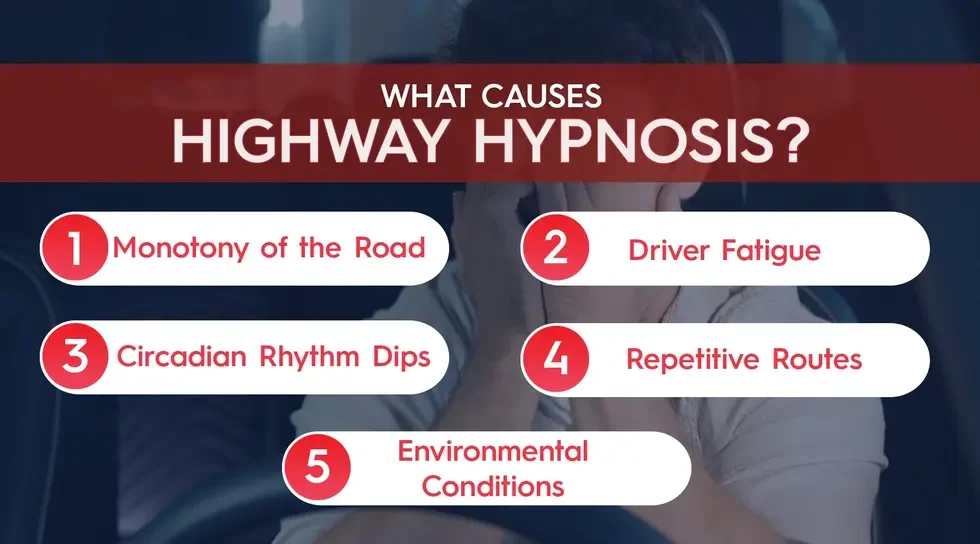
Highway hypnosis is not random; it develops from specific conditions that impact how the brain functions while driving. Some of the most common causes include:
-
Monotony of the Road: Long, straight highways with minimal scenery changes cause the brain to disengage. Without enough new stimuli, drivers become lulled into a passive state, almost like daydreaming.
-
Driver Fatigue: Fatigue is one of the strongest contributors to white line fever. Sleep-deprived drivers are more likely to rely on “automatic” driving habits instead of conscious decisions, reducing their ability to respond to sudden hazards.
-
Circadian Rhythm Dips: The body naturally experiences reduced alertness late at night (midnight to 6 a.m.) and mid-afternoon. Driving during these hours increases the risk of zoning out or even microsleep episodes.
-
Repetitive Routes: Commuters who drive the same stretch daily often pay less active attention to their surroundings, since the brain “remembers” the route. This mental autopilot can make a driver miss critical details, like a sudden lane closure or a slowing vehicle ahead.
-
Environmental Conditions: Dim lighting, steady road markings, low traffic variation, or even the soft hum of the engine can create a lulling effect, reducing situational awareness.
How Can You Avoid Highway Hypnosis?
The good news is that there are practical ways to prevent this trance-like state while driving. Preventing highway hypnosis requires conscious effort. The following steps can help keep drivers alert and reduce the likelihood of accidents:
-
Get Adequate Rest Before Driving: Always aim for 7–9 hours of sleep before long trips. A well-rested brain is far less likely to drift into autopilot.
-
Plan Breaks in Advance: Stop every 90 to 120 minutes, even if you don't feel tired. Walking around, stretching, and getting fresh air help re-engage the senses.
-
Change Your Environment: Adjust the car's interior to keep alertness high, lower the temperature slightly, roll down a window, or change your seating posture. Small physical adjustments stimulate awareness.
-
Engage Your Mind: Listening to music, podcasts, or audiobooks provides mental stimulation, which helps prevent zoning out. Simple tasks like observing license plates or varying your focus can also sharpen attention.
-
Avoid Peak Drowsiness Hours: Try to schedule trips outside late-night and early-morning hours, when your body's circadian rhythm naturally dips.
-
Share the Driving: On long journeys, switching drivers reduces fatigue and maintains higher overall alertness.
By implementing these preventive measures, drivers can greatly reduce the risk of a highway hypnosis-related crash.
What are highway hypnosis symptoms?
Recognizing the signs of white line fever is essential before it leads to an accident. Common highway hypnosis symptoms include:
-
Feeling dazed or detached from the drive
-
Loss of concentration
-
Slow reaction times
-
Daydreaming or wandering thoughts
-
Missing exits or road signs
-
Drifting between lanes without noticing
-
Snapping back to awareness suddenly
These warning signs overlap with those of drowsy driving, but the key difference is that during hypnosis, the body still performs driving functions automatically, even if awareness is reduced.
Why Is Highway Hypnosis Dangerous?
According to the National Highway Traffic Safety Administration (NHTSA), drowsy and distracted driving, including conditions like highway hypnosis, contribute to thousands of crashes each year. Because the driver is operating subconsciously, sudden emergencies—such as a pedestrian crossing or a vehicle braking ahead—may not be processed quickly enough, leading to collisions. Truck drivers, long-haul operators, and those driving late at night are particularly vulnerable.
Protecting Your Rights After a Highway Hypnosis Accident
Even the most careful driver cannot control the actions of others. When another motorist experiences highway hypnosis and causes a collision, the consequences can be severe, from catastrophic injuries to lifelong financial burdens.
At Fassonaki Law Firm P.C., we stand by accident victims across California. Our team has successfully secured settlements in car accident cases, ensuring clients receive compensation for medical bills, rehabilitation, lost wages, and emotional suffering. Call 323-524-8994 today for a free case review. We'll fight for your recovery and help you move forward with confidence.
FAQ: Common Questions About Highway Hypnosis
What exactly is highway hypnosis (white line fever)?
Highway hypnosis is an altered, trance-like state wherein drivers continue to operate their vehicles, steering, braking, and following signals, without conscious awareness or memory of the journey. The brain essentially drives on autopilot.
How is highway hypnosis different from drowsy or distracted driving?
Delegating driving to subconscious processes, highway hypnosis differs from drowsy driving (sleep-related impairment) and distracted driving (diverted attention). In this state, drivers remain awake and mechanically responsive but are mentally disengaged.
What are the warning signs of highway hypnosis?
Red flags include passing exits without realizing, feeling mentally detached, slow reaction times, drifting lanes, daydreaming, heavy eyelids, or losing track of time on familiar routes.
How can I avoid falling into highway hypnosis?
Proven strategies include taking regular breaks every 90–120 minutes, varying seating posture, rolling down windows or adjusting airflow, switching up routes, stopping to rest if signs appear, and listening to engaging music or podcasts.
